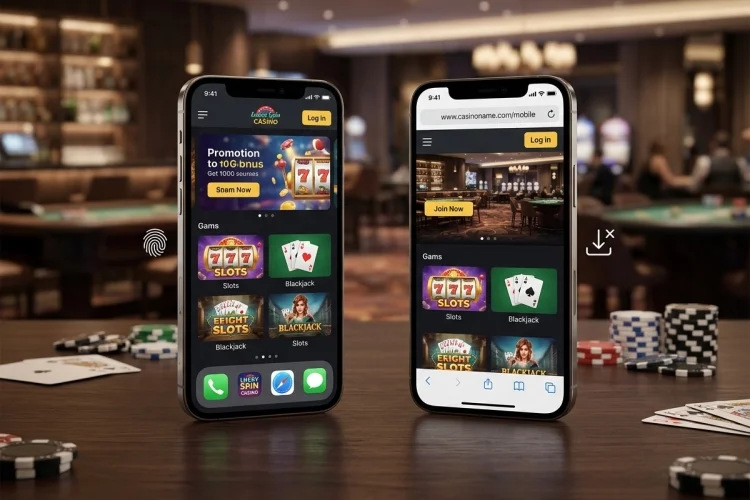
A smartphone can access an online casino in two main ways. Players can download a dedicated application or visit a mobile-optimized website through a browser.
At first glance, these formats may look almost identical because both can display slots, live tables, promotions, balances, and payment pages.
The important differences become clearer during everyday use. Mobile casino apps may provide one-tap access, biometric login, and a consistent interface.
Browser casinos avoid installation, require less storage, and can be opened on almost any compatible device. Availability may also vary because gambling applications must meet marketplace and regional requirements.
The mobile casino apps vs browser casinos decision should be based on practical needs, not claims that one produces better winnings. The format does not remove the house edge or guarantee successful results.
Instead, users should compare convenience, payment access, privacy, maintenance, game compatibility, and responsible-gambling tools.
Convenience and Accessibility
Apps are designed for fast access. After installation, players can open the platform from a home-screen icon and may use fingerprint or facial recognition when those functions are supported.
Browser casinos require users to open a browser and visit the correct website. Saving the operator’s verified domain as a bookmark can make this process almost as quick while reducing the risk of entering an imitation site.
Browsers are particularly convenient when several devices are used. There is no need to download and maintain separate software on every phone or tablet.
Game Libraries and Live Casino Access
Most operators attempt to provide similar game libraries across their apps and mobile websites. Common options include slots, roulette, blackjack, baccarat, video poker, jackpots, and live dealer games.
Differences can occur when an older title is incompatible with a particular browser or operating system. Screen orientation, available memory, and device performance may also affect how comfortably a game runs.
Live casino streams need a stable connection regardless of the chosen format. Lower video quality, when available, may improve performance on slower networks or limited mobile data plans.
Payments and Account Management
Casino accounts are normally stored on the operator’s systems rather than on one device. This means balances, identity verification, transaction history, and withdrawal requests can usually be viewed through either format.
The cashier experience may still differ. An app might integrate smoothly with supported payment services, while a browser may make it easier to move between banking pages or upload verification documents.
Before depositing, review transaction limits, potential fees, withdrawal processing, accepted currencies, and identity requirements. Convenient payment buttons should never replace careful reading of the financial terms.
Storage, Updates, and Phone Resources
A browser casino requires no large installation and is updated directly by the operator. This is useful for devices with limited storage or users who do not want to maintain numerous applications.
Apps require space and regular updates. Depending on their design and settings, they may also use battery power through notifications, background activity, or location checks.
Users should review requested permissions before installation. Location access may be needed to confirm legal eligibility, but unrelated permissions should receive closer examination.
Availability and Regulatory Restrictions
An operator may offer a complete browser platform without distributing an application in every country. App marketplace policies, local laws, and the geographic coverage of the operator’s licence can affect availability.
Apple requires real-money gaming apps to possess the necessary licences and use geographic restrictions where appropriate. Google Play also limits eligible gambling applications to supported regions and requires protections against underage and unauthorized use.
A missing app does not automatically mean that a browser platform is unsafe. The essential question is whether the operator is properly licensed to serve the player’s location.
Security and Trust Checks
For an application, verify the publisher, official download source, privacy information, update history, and requested permissions. Avoid installation files received through unknown messages, advertisements, or unofficial websites.
For a browser casino, confirm the domain spelling, secure connection, company details, and licence information. A regulator’s public register can help users verify licensed businesses and their declared domains.
Use a unique password and multi-factor authentication when available. Avoid logging into financial accounts through unsecured public networks.
Responsible Gambling on Mobile
Mobile access can make casino platforms available throughout the day, so control tools are important. Valuable features include deposit limits, session reminders, transaction history, time-outs, marketing controls, and self-exclusion.
The UK Gambling Commission lists controls for time and money, playing history, activity restrictions, and self-exclusion among its safer-gambling resources.
Players can also disable promotional notifications or remove saved payment methods. Some users may prefer browser access because opening a website creates an extra step before gambling.
Mobile casino apps suit users who value fast access, biometric login, and an interface developed for a specific device. Browser casinos appeal to those who prefer flexibility, automatic updates, lower storage use, and fewer installations.
The best format is the one that makes account information, payments, terms, and control tools easy to understand. Verify the operator’s licence and official domain, compare its games and cashier options, and examine application permissions before choosing.
Set a fixed entertainment budget and time limit before playing. Test the regulated browser platform first, then install the official app only when it provides a clear and useful advantage.