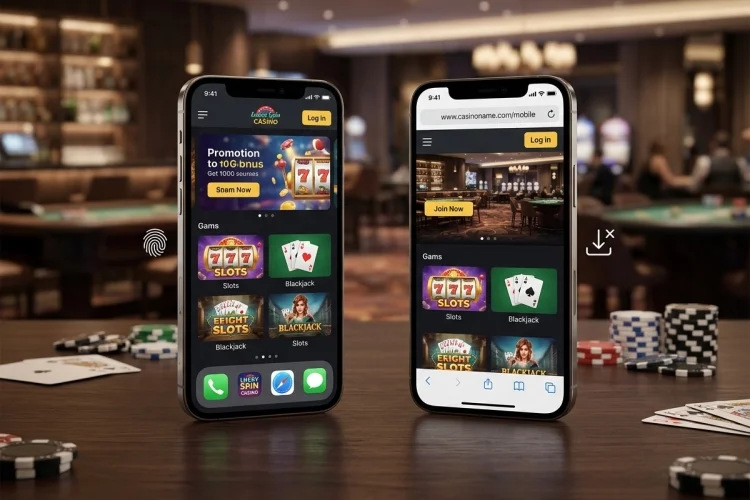
Online slots no longer belong to the desktop browser. Modern games can run on smartphones, tablets, laptops, and desktop computers, often using the same account and game library across several devices.
The Mobile Slots vs Desktop Slots comparison therefore comes down less to basic availability and more to how each format feels in everyday use.
Screen size, touch controls, portability, internet connection, battery consumption, and interface design can all change the experience. Understanding these differences can help you choose the device that suits the way you prefer to play.
Mobile Slots Are Built Around Portability
The biggest advantage of mobile slots is obvious: your phone is already with you.
There is no need to sit at a desk or open a laptop. A modern mobile browser or casino app can provide access to games from almost anywhere a legal and suitable internet connection is available.
That flexibility makes shorter sessions more convenient.
However, portability can also mean more interruptions. Messages, incoming calls, low-battery notifications, or switching between applications can break the flow of a session.
Desktop computers generally provide a more dedicated environment. If you prefer fewer distractions and longer sessions, the larger device can feel more focused.
Screen Size Changes How a Slot Feels
Modern slot interfaces contain reels, multipliers, bonus meters, paytables, balance information, and several control buttons.
A desktop screen simply has more physical space to display everything.
On mobile, developers need to reorganize those elements for a narrower viewport. Responsive web design specifically allows layouts to adapt according to screen dimensions and input methods such as touch.
Google web.dev describes responsive design as changing layouts to suit the capabilities and size of the device being used.
This does not mean mobile games need fewer features.
Instead, menus may be hidden behind icons or moved to different positions.
A well-designed mobile slot can still be easy to use, but checking complex paytables may require more taps than on desktop.
Touchscreen Controls Feel Different From a Mouse
Mobile slots are designed around fingers rather than a pointer.
Large spin buttons, swipe-friendly menus, and simplified navigation can make touchscreen play feel natural.
Desktop interfaces provide greater precision through a mouse or trackpad.
That can be useful when navigating detailed settings, viewing long paytables, or switching quickly between several browser tabs.
Neither input method affects the random result simply because one uses touch and another uses a mouse.
The difference is mainly usability.
Good responsive design should account for touchscreens and other pointer types rather than merely shrinking a desktop interface onto a smaller screen.
Poor mobile optimisation, on the other hand, can produce tiny buttons or awkward navigation.
The Same Slot Should Follow Its Published Game Rules
A common question is whether switching from desktop to mobile changes how the slot pays.
Device format by itself should not secretly change the rules of a regulated game.
The UK Gambling Commission requires random outcomes to follow the expected theoretical probabilities and requires games to operate according to the rules and payouts described to customers. Undisclosed adaptive changes to probabilities during play are not permitted under its standards.
Therefore, if an operator provides the same game version with the same published RTP and paytable across mobile and desktop, changing screen size should not magically make one device luckier.
Still, check the information panel.
Providers can offer different versions or configurations of a game, so verifying the displayed RTP and rules is more reliable than assuming every similarly named title is identical.
Desktop Can Offer a Clearer View of Complex Features
Modern slots can become visually busy.
Megaways-style layouts, cascading symbols, expanding reels, collection meters, multipliers, and several bonus indicators may all appear at once.
A larger monitor gives these elements more breathing room.
Desktop can therefore be easier when learning an unfamiliar game or reading a complicated help section.
Mobile developers compensate through responsive layouts.
MDN explains that responsive design automatically adapts layouts across phones, tablets, and wider displays.
A properly optimised mobile version might enlarge essential controls and move secondary information into menus.
The result can actually feel cleaner, even if less information remains visable simultaneously.
Mobile Hardware Can Affect Smoothness
Slots contain animation, sound, graphics, and sometimes fairly demanding visual effects.
A newer flagship phone may run them smoothly. An older phone with limited memory or an outdated browser may experience slower loading or animation stutter.
Desktop systems often have more processing headroom and stronger cooling, especially for longer sessions.
However, hardware quality matters more than the broad mobile-versus-desktop label.
A modern smartphone can easily outperform an old laptop.
Slow device performance is primarily a user-experience issue rather than evidence that the game result itself has changed.
UK technical standards separately recognise that device performance and network latency can disadvantage players when timing is relevant.
Battery Life Matters on Mobile
Desktop computers normally remain connected to a power source.
Phones do not.
Keeping the screen active while running graphics and maintaining an internet connection can gradually drain battery life.
Google’s Android guidance specifically notes that graphics-heavy games, long periods of screen activity, and constant internet connections can increase battery consumption.
Apple’s Low Power Mode similarly reduces background activity, some visual effects, and certain performance-related features to extend battery life.
For a ten-minute session this may not matter.
For long periods away from a charger, mobile battery usage becomes a practical difference that desktop players rarely need to consider.
Cellular Data Creates Another Mobile Consideration
A desktop computer is usually connected through fixed Wi-Fi or Ethernet.
Mobile players may switch between Wi-Fi and cellular networks.
Ordinary slot gameplay is usually less bandwidth-heavy than video streaming, but game assets, lobby graphics, updates, and background applications still use data.
Phones provide tools to control this.
Apple’s Low Data Mode reduces background network activity, automatic downloads, and some streaming quality when enabled.
Mobile accessibility guidance also recommends serving appropriately sized assets to smaller devices because phones may use slower or metered network connections.
For users with limited mobile plans, Wi-Fi can therefore make longer sessions more practical.
Desktop Makes Multitasking Easier
Large screens provide another advantage: space for information.
You can keep the game open while viewing the paytable, casino terms, account history, or other information in another window.
On a phone, switching between pages often means replacing one full-screen view with another.
Some users prefer that simplicity.
Others prefer the ability to compare information simultaneously.
This is mostly personal preference rather than a gaming advantage.
A larger display cannot change a properly implemented random result, but it can make information easier to read and the overall comparision process more comfortable.
Connection Interruptions Matter on Both Devices
Phones can move between Wi-Fi and cellular coverage, making connection changes more common.
Desktop connections may be more stable, particularly through Ethernet, but interruptions can happen anywhere.
Regulated systems are expected to have policies for interrupted gambling.
UK standards state that when a wager has already been accepted and the player can no longer influence the outcome, the result should generally stand; games with multiple stages should be restored where reasonably possible.
This is another reason server records matter more than the animation visible on your screen.
Closing a browser or losing signal does not necessarily erase a wager already processed by the gaming system.
So Which Format Makes More Sense?
Mobile is strongest when portability, touchscreen convenience, and quick access matter.
Desktop is strongest when you value a larger display, precise navigation, easier multitasking, and a more consistant power and network setup.
You do not necessarily need to choose only one.
Many users move between devices depending on where they are and how long they plan to play.
The useful question is not which platform is universally superior, but which provides the clearer and more comfortable interface for that particular situation.
Mobile Slots vs Desktop Slots is mainly a difference in experience rather than automatically different game mathematics. Mobile offers portability and convenient touch controls, while desktop provides more screen space, multitasking, and stable power.
Check the actual game rules and RTP regardless of device, then use the platform that gives you the clearest interface and most comfortable way to manage your session.